
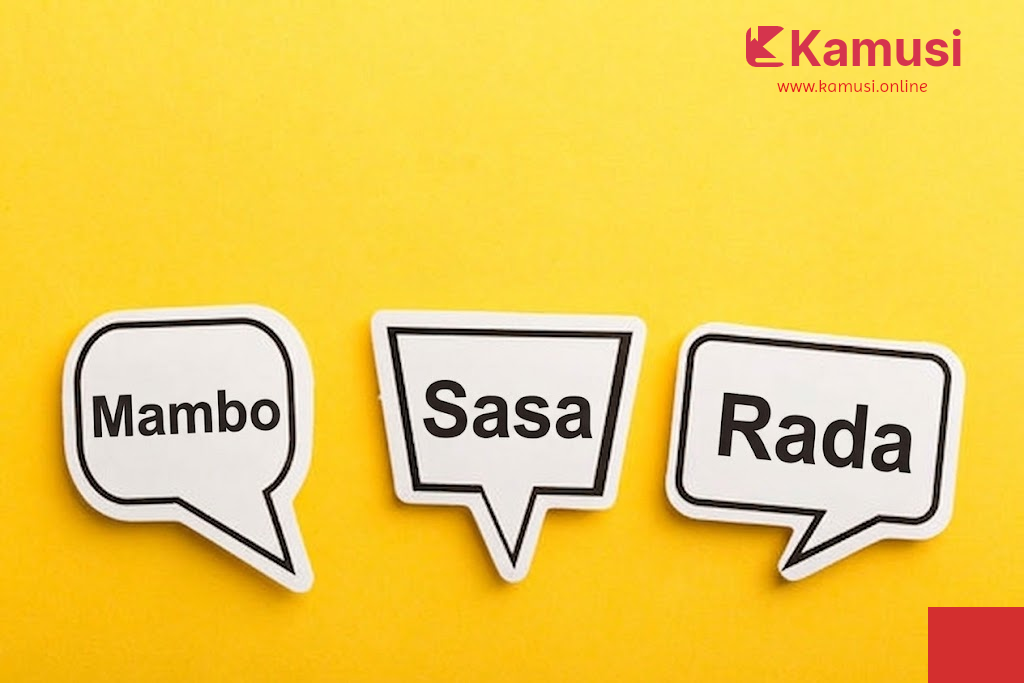
Kenya's greeting culture is more layered than most visitors expect. While a basic Swahili phrase will always be welcomed, understanding how and when to greet people — and which words to use — says a great deal about your cultural awareness. Nowhere is this more evident than in Nairobi, where language is dynamic, context-driven, and constantly evolving.
The Foundations: Standard Swahili Greetings
Swahili is Kenya's national language, and two greetings form the basis of most introductions:
- Habari — literally meaning "What is the news?", used as a general "How are you?" The standard response is Mzuri (good or well).
- Jambo — a straightforward hello, responded to simply with Jambo.
Both are correct, universally understood, and appropriate across East Africa wherever Swahili is spoken — Tanzania, Uganda, and beyond. That said, if you use these exclusively in Nairobi, you may find they mark you immediately as an outsider. Here's why.
A Tale of Two Kenyas: Coast vs. Inland
Language use in Kenya varies significantly by region, and it's worth understanding this distinction before arriving in the capital.
Along the Kenyan coast — in cities like Mombasa, Malindi, and Lamu — people speak a more classical, formal variety of Swahili. It is precise, well-preserved, and closely aligned with what one would encounter in a language classroom.
Inland Kenya, and Nairobi in particular, tells a different story. Here, Swahili is spoken fluidly alongside English and Sheng — a dynamic, ever-evolving urban cant rooted in Swahili but drawing freely from English and various Kenyan languages. The result is a rich linguistic landscape where speakers move between registers with ease, often within a single conversation.
Everyday Greetings in Nairobi
For day-to-day interactions among peers, friends, and colleagues of similar age, three greetings dominate:
- Sasa? Derived from the Swahili word for "now", this functions as an informal "How's it going?" The expected — and almost universal — reply is Poa (cool or good). It is perhaps the most commonly heard greeting among urban Kenyans.
- Mambo? Roughly translating to "How are things?", this carries the same casual warmth as sasa and is equally widespread. Again, Poa is the standard reply.
- Rada? A Sheng expression with the same meaning as the two above, rada carries a distinctly street-level familiarity. It's common among younger urban Nairobians and reflects the city's vibrant, ever-shifting slang culture. Reply: Poa.
Understanding Context: When Formality Matters
This is perhaps the most important aspect of Kenyan greeting culture — knowing when not to use casual language.
Sasa, mambo, and rada are firmly informal. They are appropriate among friends, peers, and people of a similar age or social standing. Using them with an elder, a superior, or someone in a formal setting can inadvertently signal a lack of respect — not because the words themselves are offensive, but because they imply an inappropriate level of familiarity.
In professional environments, formal meetings, or when addressing elders, it is advisable to default to Habari — or simply a courteous "Good morning" or "Good afternoon" in English. Nairobians are highly proficient in English and use it extensively in business and professional contexts, so there is no need to feel pressured to use Swahili in every situation.
When in doubt, observe and follow the lead of those around you.
Final Thoughts
Nairobi is a city that navigates language with remarkable fluency and ease. The ability to move between formal and informal registers — sometimes mid-sentence — is a hallmark of the Nairobian social experience. For visitors and newcomers, the key is not perfection, but awareness: understanding that the right greeting, in the right context, goes a long way in building genuine connection.
A well-placed "Sasa?" among the right company will earn you a warm "Poa" and quite possibly a smile. And in Nairobi, that's as good a beginning as any.